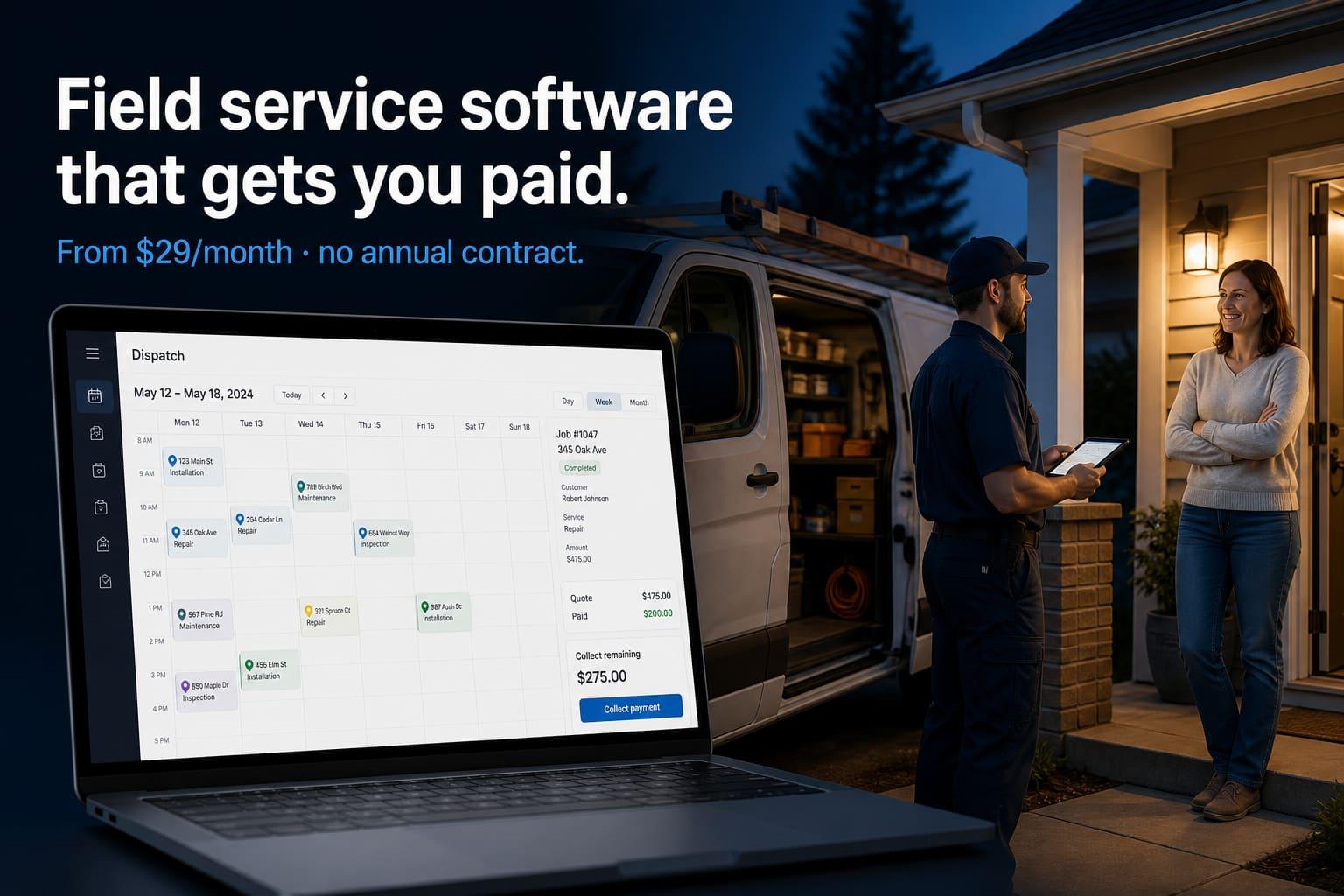
Jobber’s employee-scheduling guide lists the usual: plan resources, follow labor law, have a backup. True. The part shops skip is the calendar lying to you. A spreadsheet that says 9am is booked is not a booking if the customer never put a card down.
One board. One assignee. One job record.
- Unscheduled backlog vs the day — so “we’ll fit it in” has a place to live.
- Assign a person, not a van-shaped hope.
- The tech opens today’s jobs on a phone with the house file attached.
- When the plan changes, change the job — not a side text that the office never sees.
Make the slot real
Online booking that is just a form is a callback list. Pay to book means they approve the quote, put a deposit on your Stripe, and then the job lands on the board. You stop playing answering service for people who got a cheaper yes elsewhere.
Efficiency that is not “drive faster”
- Group by geography when you can — you do not need a $500/month routing AI to notice two jobs on the same street.
- Do not stack callbacks on a tech who is already in the weeds. Flag “we were just here” on the house.
- Leave recovery time after nasty jobs. A calendar with zero slack is a fiction.
- Know labor rules in your province or state. Software does not replace that.
When the team grows
Color-coding people is cute. A second login that sees the same jobs is required. Extra seats on TradeCommands are $15. Read when to hire before you add a truck to a broken board.
Day view or week view?
Owners live in the week. Techs live in today. You need both on the same data.
Should customers pick any time online?
Offer windows you can keep. A public calendar of every 30-minute slot is how you get a water heater install at 4:45pm on a Friday.