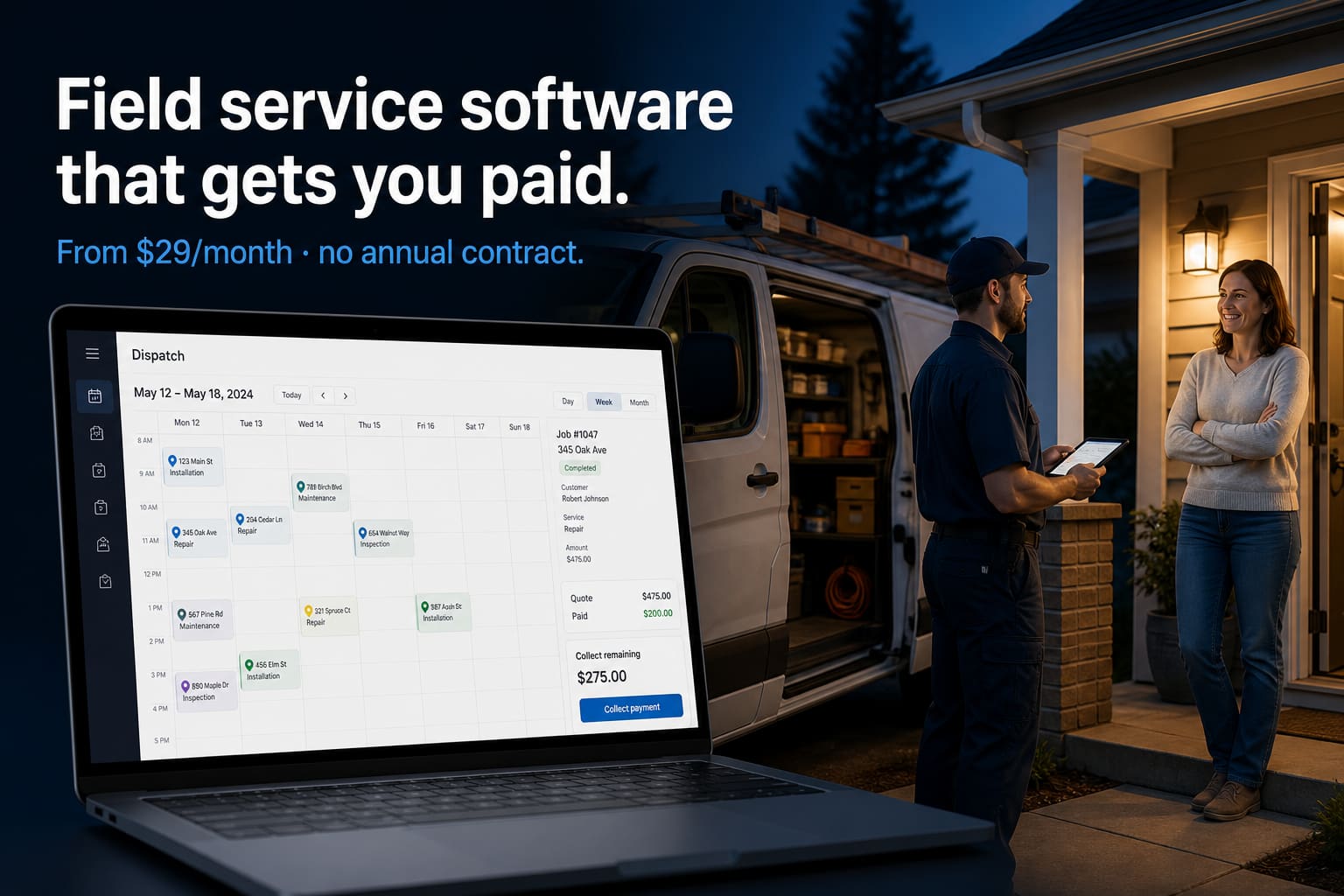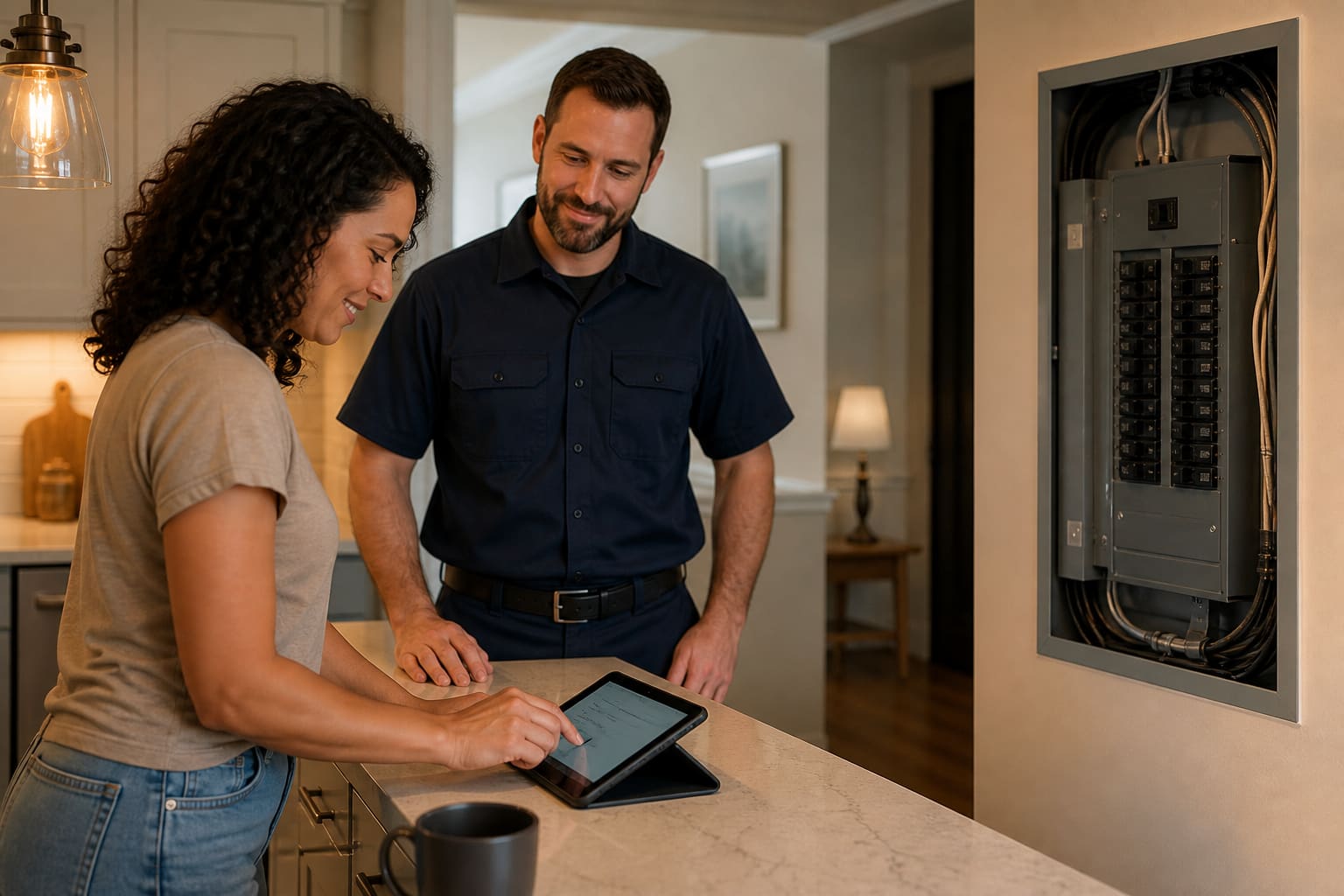
Most trade shops do not fail because the owner cannot solder, charge a system, or land a panel. They fail because the office work never became a system. Quotes sit in a notes app. The schedule is a group text. Invoices go out “when we get a chance.” Reviews are a hope.
Jobber, Housecall Pro, and ServiceTitan all publish versions of this same advice: one loop for the job. That part is right. The rest is which loop you pick, and whether it actually collects money.
The only loop that matters
A healthy plumbing, HVAC, or electrical company runs the same five moves on every paying job:
- Quote with real prices — not a number you invented on the driveway.
- Book only when the slot is real. A deposit beats a “maybe Tuesday.”
- Dispatch one record to the truck: address, unit history, photos, notes.
- Collect remaining balance before the van leaves.
- Follow up on unpaid quotes, open invoices, and a review *after* they pay.
If any of those five lives in a different tool, you will drop it when the day gets loud. That is not a character flaw. That is software that does not match how a shop actually works.
Run the office in one place
One record per job
Client, property, quote, schedule, invoice, photos, and payment should be the same job — not five copies. When the tech asks “what did we do last time?”, the answer is on the house file, not in someone’s head.
Same prices on the truck
If the office quotes a capacitor at $89 and the truck writes $40, you trained the market to negotiate. A shop rate book with cost next to price is how you stop that.
Found work is not a second quote
Rotten board, dead capacitor, failed T&P — photo it, let the customer approve on the tracker, add it to the invoice. That is While we’re here. Jobber shops have asked for this for years. Do not make it a callback you never bill.
What “good” looks like week one
- Every booked job has a client and an address.
- Quotes the customer can approve (and pay a deposit on).
- A day board the tech can open on a phone.
- Invoices that go out the same day the work finishes.
- Cards land in your Stripe — not a processor you cannot leave.
Then market the work you already did
The cheapest marketing a trade company has is the job that just finished. Before/after on Social Boost, a review request after the invoice is paid, and a Google Business Profile that is not abandoned. See social media for contractors and how to get more Google reviews.
Can I still run the business from my phone?
Yes — if the field view is the same record as the office. A separate “tech app” you pay extra for is how shops lose notes at 5pm.
Do I need a full office manager first?
No. One owner-operator can run this loop. Hire when the board is full and you are leaving money on the driveway. Read when to hire your first technician.