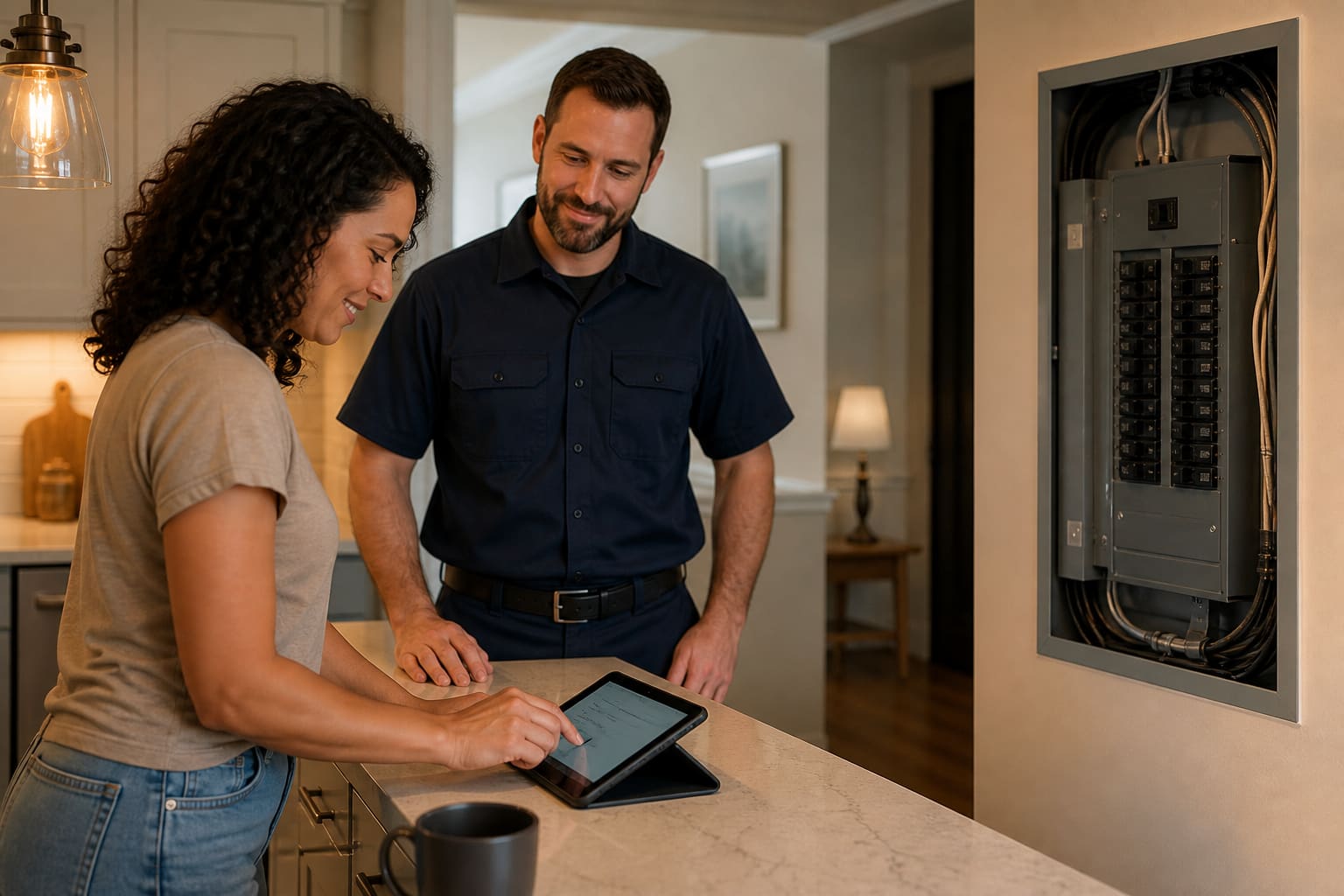
Jobber Academy has a whole genre of “how to write a quote” posts because shops still send a dollar amount in a text. That is not a quote. That is a suggestion. A quote a customer can approve has line items, a total, terms, and a way to put money down so the day is real.
What belongs on the quote
- Who and where — client + property, not “the guy on Maple.”
- Line items from the rate book, not vibes.
- What is included and what is not (permit, haul-away, drywall patch).
- Validity window — prices are not a lifetime membership.
- Deposit to book. Pay to book is how no-shows die.
Write like a human
Lead with the outcome: “Replace 40-gallon gas water heater, haul old unit, same location.” Then the lines. Homeowners skim. Technicians argue. The PDF should survive both.
Do not hide the number
Burying the total under three paragraphs of fear is how you look expensive *and* untrustworthy. Put the total where a thumb can find it. If the price is right, pricing the job already did the hard work.
Send it. Then follow up.
A quote that sits is a maybe. Nudge with the pay/approve link in the email, not “circling back!” Scripts: quote and invoice follow-up.
When they say it is too high
- Ask what they are comparing — a cash cousin, a $89 Groupon, or a real shop.
- Show the lines. Remove a nice-to-have if you must. Do not silently eat margin.
- If they want cheap, they want a different company. Let them.
Approved quotes that take a deposit are how you reduce no-shows. Unpaid “verbal yes” is how you waste a Thursday.
Should every service call get a formal quote?
Diagnostic visits can be a posted rate. Installs, replacements, and anything over a small threshold should be a proper quote they can approve.
PDF or online approve?
Online approve wins. They are already on their phone. A PDF they have to print is how quotes die in a downloads folder.